Long before guests notice the centerpieces or study the menu, they begin to experience the room. More often than not, what they’re responding to is the lighting.
A softly lit space feels intimate and romantic. Bright, even lighting creates an energetic and welcoming atmosphere. Warm, golden tones feel celebratory, while cool, crisp lighting lends a space a modern, polished look.
Lighting doesn’t simply illuminate an event. It shapes the emotional experience of it.
That’s why choosing the right lighting deserves just as much attention as selecting your colors, florals, or venue. It’s more than a technical detail; it’s part of the story your event tells.
Start with the Mood, Not the Fixtures
Before selecting lighting equipment or effects, ask yourself one simple question:
How do I want my guests to feel the moment they walk into the room?
Do you want the atmosphere to feel:
Warm and inviting?
Elegant and dramatic?
Bright and celebratory?
Soft and romantic?
Sleek and contemporary?
The answers should guide your lighting choices.
A rehearsal dinner may benefit from warm, candlelit tones that encourage conversation and connection. A milestone birthday might call for vibrant lighting that adds excitement and energy.
A corporate gala often feels best with clean, polished lighting that reflects professionalism and complements the company’s brand.
A wedding reception may evolve throughout the evening, beginning with soft, romantic lighting during dinner before transitioning to brighter, more dynamic lighting for dancing and celebration.
When you begin with the feeling rather than the fixtures, the right lighting choices tend to follow naturally.
Understand the Different Types of Event Lighting
Lighting isn’t a single decision; it’s a layered design element.
Understanding the different types makes planning much easier.
Ambient Lighting
Provides the overall illumination of the room and establishes the general mood.
Accent Lighting
Highlights important features such as centerpieces, floral arrangements, cakes, or architectural details.
Task Lighting
Ensures that practical areas such as buffet stations, bars, gift tables, and registration desks have sufficient visibility.
Decorative Lighting
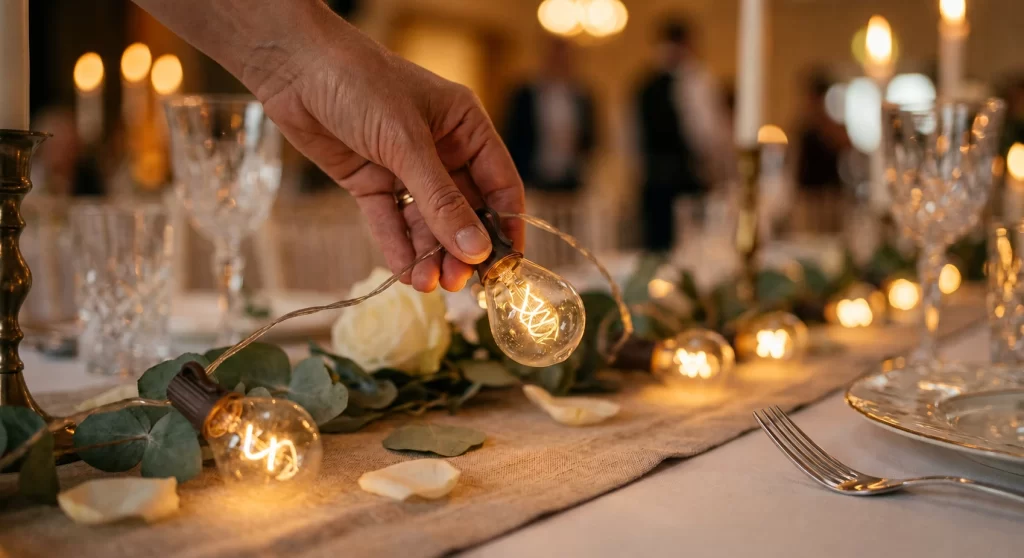
Includes string lights, chandeliers, uplighting, lanterns, and other decorative fixtures that add character and visual interest.
The most successful events combine several of these layers rather than relying on just one.
Let the Venue Guide Your Lighting Choices
Just as your venue influences your décor and color palette, it should also influence your lighting plan.
A venue filled with natural daylight may require very little additional lighting during the afternoon but will need thoughtful adjustments as evening approaches.
A ballroom with neutral walls provides an ideal canvas for uplighting and color washes.
A rustic barn or industrial loft often has architectural character that lighting can enhance rather than compete with.
Working with your venue’s natural features almost always creates a more cohesive and polished result.
Use Lighting to Guide the Guest Experience
Lighting does more than establish atmosphere. It also helps guide guests’ experience of the event from beginning to end.
Consider how lighting can support different areas:
- Entrances and Welcome Areas – Bright, welcoming lighting helps guests feel comfortable and oriented.
- Dining and Lounge Spaces – Softer lighting encourages conversation and creates a relaxed atmosphere.
- Stages, Sweetheart Tables, and Dance Floors – Focused lighting naturally draws attention to important moments.
- Toasts, First Dances, and Speeches – Subtle changes in lighting help shift guests’ attention without a word.
Thoughtful lighting transitions make an event feel as though it unfolds naturally, creating memorable moments throughout the celebration.
Common Lighting Mistakes to Avoid
Even beautifully planned events can lose some of their impact when lighting becomes an afterthought.
Some of the most common mistakes include:
Relying solely on the venue’s overhead lighting, which can often feel harsh or flat.
Choosing lighting that photographs well but feels uncomfortable in person.
Overusing colored lighting that competes with the event’s décor instead of complementing it.
Forgetting that lighting needs to change throughout the event.
What feels perfect during a formal dinner may not create the right energy once the dance floor opens.
Planning those transitions in advance helps the event feel intentional from beginning to end.
The Best Lighting Feels Effortless
The most memorable event lighting rarely calls attention to itself.
Instead, guests simply notice that the room feels beautiful, welcoming, elegant, or exciting without necessarily realizing why.
That effortless feeling is almost never accidental.
It’s the result of thoughtful planning long before the first guest arrives.
Final Thoughts
Lighting is one of the quiet forces behind every unforgettable event.
It shapes the mood, guides the guest experience, and brings every other design element to life.
At Here2Serve, we believe exceptional events are created through intentional details, and lighting is one of the most influential.
When color, décor, and lighting work together, they create more than a beautiful venue.
They create an atmosphere that guests feel the moment they arrive and remember long after they leave.
So, as you plan your next event, don’t leave lighting until the last minute.
Start with the feeling you want to create.
Let your lighting support your vision, tell your story, and transform your event, one warm glow at a time.
Ready to set the perfect scene for your next event? Contact Here2Serve today for a professional lighting consultation and event design services.